- 21st September, 2026
- By Rob Wallace
Why Digital Identity Services Are About More Than Security
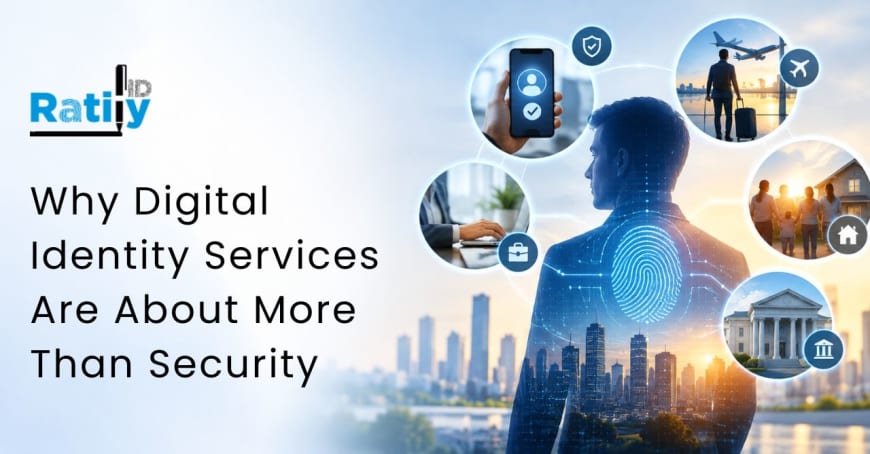
When people talk about digital identity services, security is usually the first thing that comes to mind. Encryption standards, data storage protocols, and breach-prevention measures are all important, and any genuine digital identity verification system must get them right.
But security alone doesn't determine whether a digital identity system actually works in practice. Digital identity services are about more than security because successful adoption also depends on trust, inclusion, appropriate verification levels and user experience. People are more likely to use a digital identity service when they understand how their information is handled, can complete verification without unnecessary barriers and feel in control of how their identity is shared.
The Australian digital identity landscape has changed significantly since the Digital ID Act 2024 came into effect. The legislation provides a framework for regulating entities that provide or rely on Digital ID services, strengthens Australia's voluntary Digital ID Accreditation Scheme, and establishes additional privacy and consumer protections. For organisations, this means digital identity is no longer simply a technical consideration. It is also about building trust and creating verification experiences that people are willing and able to use.
What Are Digital Identity Services?
Digital identity services allow individuals and businesses to verify who they are through secure digital systems when accessing services or completing transactions. They can replace or supplement traditional document-based identity checks and, depending on the service, can make verified identity information easier to reuse throughout various interactions.
For businesses, the value goes beyond faster verification. Well-designed digital identity services can help reduce unnecessary data collection, improve user experience, support fraud prevention and create a more consistent approach to identity verification.
Why Is Trust Important for Digital Identity Services?
Data breaches and identity misuse have become an increasingly important concern for organisations handling personal information. The Office of the Australian Information Commissioner (OAIC) reported 1,205 data breach notifications during the 2025 calendar year, an 8% increase from 1,112 notifications in 2024 and the highest annual volume since the Notifiable Data Breaches (NDB) scheme began in 2018.
This environment matters when an organisation asks someone to provide personal information through a digital system. Users need more than an assurance that the technology is secure. They also need confidence that their information will be collected, handled and protected responsibly.
Several factors influence trust in digital identity services:
Government-backed Digital ID accreditation can add another layer of confidence. Accreditation demonstrates that a provider has met defined requirements covering areas such as privacy, security, usability, accessibility, risk management and fraud control.
Key Takeaway: Security helps protect a digital identity system, but trust extends beyond security alone. Privacy, transparency, accountability and user control all contribute to whether people feel confident using digital identity services.
How Can Digital Identity Services Improve Inclusion?
Here's a practical challenge that often gets missed in digital identity conversations. Some people struggle to complete traditional document-based identity checks because they may have limited access to conventional identification documents or stable address information.
This can affect different groups for different reasons, including people with limited document histories, migrants establishing their identity in a new country, and people experiencing housing instability.
A digital identity verification system that only works for people with conventional documentation can therefore create barriers before the verification process even begins. For businesses, that exclusion isn't just an ethical concern. It can also become a practical and commercial one, particularly when business identity verification needs to support a diverse range of customers.
A more adaptable approach to identity verification can use a wider range of appropriate identity signals where permitted and relevant; information such as established account histories or other verified records may supplement traditional documents. This stratified approach doesn't necessarily lower verification standards. Instead, it can create additional pathways for people to establish their identity while helping businesses maintain effective and inclusive business identity verification processes.
What Are Assurance Levels in Digital Identity Verification?
Not every transaction carries the same level of risk. Opening a loyalty account requires a different level of confidence in someone's identity than accessing a financial product or verifying a contractor for a sensitive worksite. Digital identity services can therefore use appropriate assurance levels, where the depth of verification reflects the transaction's risk and context. For example:
- Lower-risk interactions: May require a simpler identity check where the consequences of incorrect identification are limited.
- Standard customer onboarding: May require document and identity verification appropriate to the service.
- Higher-risk transactions: May require additional verification measures, potentially including biometric checks.
- Business verification: Requires checks appropriate to verify an organisation's legitimacy and status.
The principle is simple: the higher the potential risk, the greater the level of confidence required in the identity being verified. This approach also benefits users by limiting unnecessary data collection. Rather than routinely asking people to provide everything available about their identity, the system can request information appropriate to the specific context.
Digital Identity Services vs Traditional Identity Checks
Where Ratify ID Fits Into This Picture
Ratify ID is an accredited digital identity services provider operating within Australia's Digital ID framework. Its accreditation gives businesses an identity verification option that meets the Australian Digital ID Accreditation Scheme requirements.
For businesses, integrating an accredited digital identity service into a customer or contractor verification workflow isn't simply a compliance exercise. It can provide verified digital identity while reducing the need for individuals to repeatedly complete similar authentication procedures across different engagements, where reuse is supported.
For industries such as financial services, property, healthcare and professional services, identity verification can be both a regulatory consideration and a business risk management tool. A reusable approach can turn identity verification from a repeated operational task into an optimised process that lets individuals verify and share their identity as required.
Ratify ID's approach to digital identity verification also considers the inclusion challenge. Supporting broader identity signals can help businesses build verification workflows that are better suited to the range of customers and contractors they actually deal with.
Why Does User Experience Matter in Digital Identity Services?
A digital identity system can be technically sound, formally accredited and comprehensively designed, and still fail if people find it confusing or frustrating to use.
Adoption depends partly on whether people are willing and able to complete the process. That means clear interfaces that guide users through each step without gratuitous jargon or complexity. It means the system should work across multiple devices and connection speeds. It also means the language used should account for varying levels of digital skills.
Most importantly, establishing, storing, and sharing a digital identity should feel understandable and within the user's control.
The most successful digital identity services combine robust back-end security with front-end simplicity. Neither works effectively without the other. A secure system that people don't trust or understand can struggle to achieve adoption. In contrast, an easy-to-use system without strong security and privacy controls creates a different set of risks.
Take the Next Step With Ratify ID
If your business is working through how to implement digital identity verification that is compliant, inclusive and genuinely trusted by the people using it, Ratify ID can help.
As an accredited provider under Australia's Digital ID framework, Ratify ID offers digital identity services built around real-world usability, alongside the security, privacy, and accreditation standards businesses require. Contact the Ratify ID team to learn how digital identity verification can work for your specific business setting.